The First Commemorative Coin of Cooch Behar
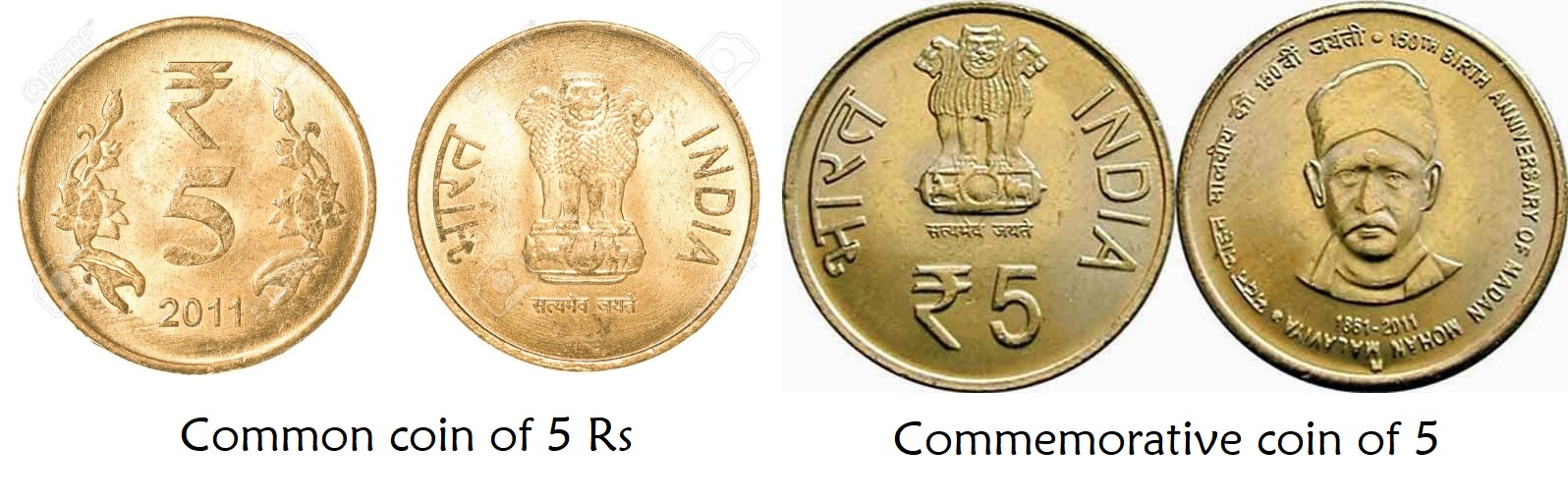
Many people may not know that coins generally fall into two categories: (1) regular circulation coins, and (2) commemorative coins. Today’s discussion focuses on the first commemorative coin issued by Maharaja Naranarayan of Cooch Behar.
Throughout the history of coinage, rulers rarely introduced new coins solely out of personal desire. Instead, they typically modelled their currency on the coinage of neighbouring kingdoms—an age-old practice seen across regions and empires.
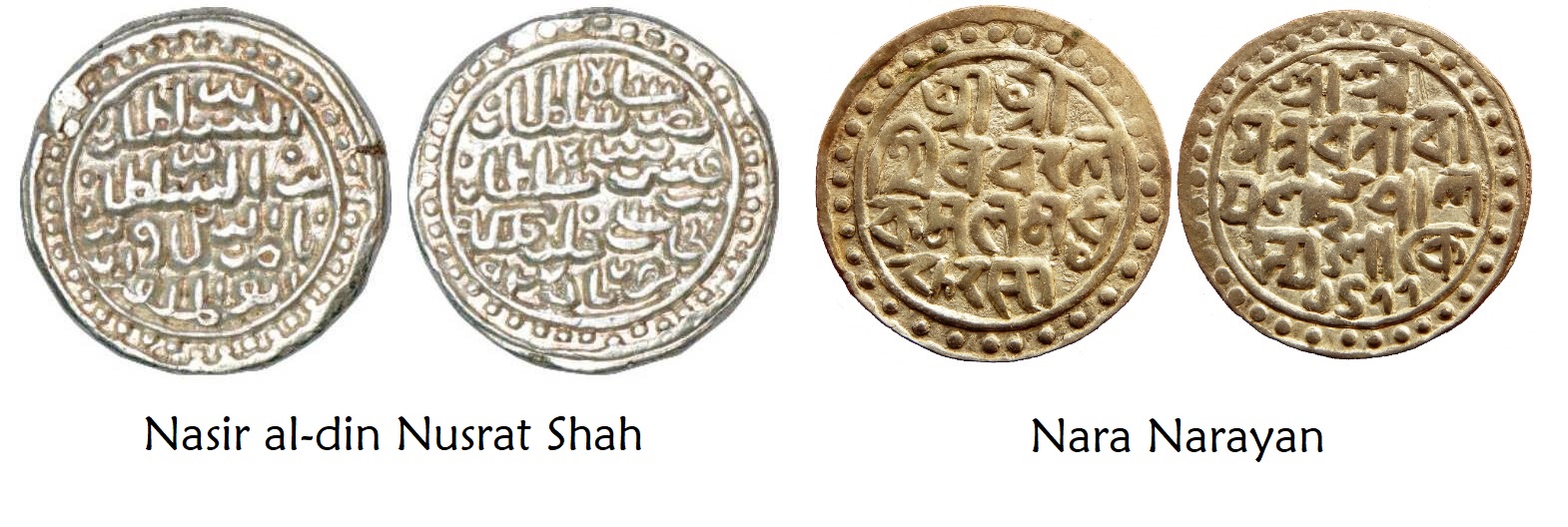
Before the rise of the Cooch Behar kingdom, the region was under the authority of the Sultans of Bengal, and naturally, their coins were widely circulated. The first ruler of Cooch Behar, Maharaja Viswa Singha (1523–1554), is not known to have issued any coins—none have been discovered to date, for reasons still unknown. However, his son, Maharaja Naranarayan, introduced coins closely modelled on those of Nasiruddin Nusrat Shah (1519–1531), following similar weight, pattern, and artistic layout.
These coins typically featured a circular dotted border, with the name of the presiding deity inscribed on one side and the name of the ruler on the other. Naranarayan’s coin—popularly known as the Narayanī Coin—was widely circulated across large parts of Northeast India.
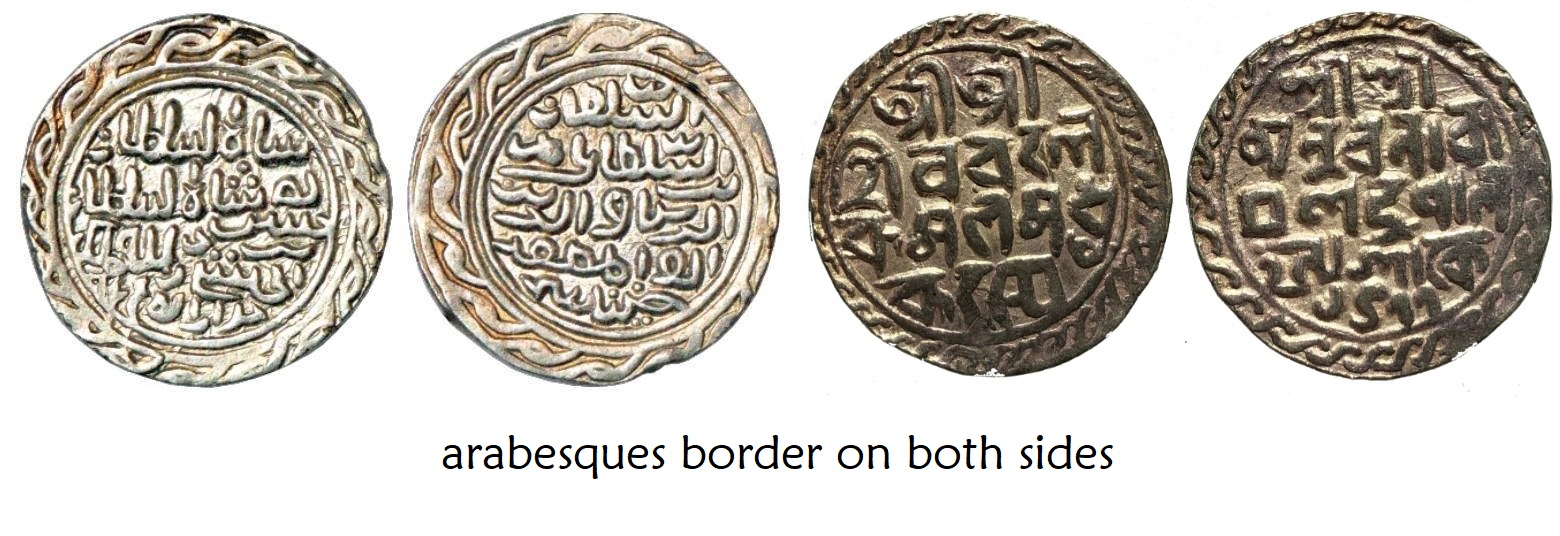
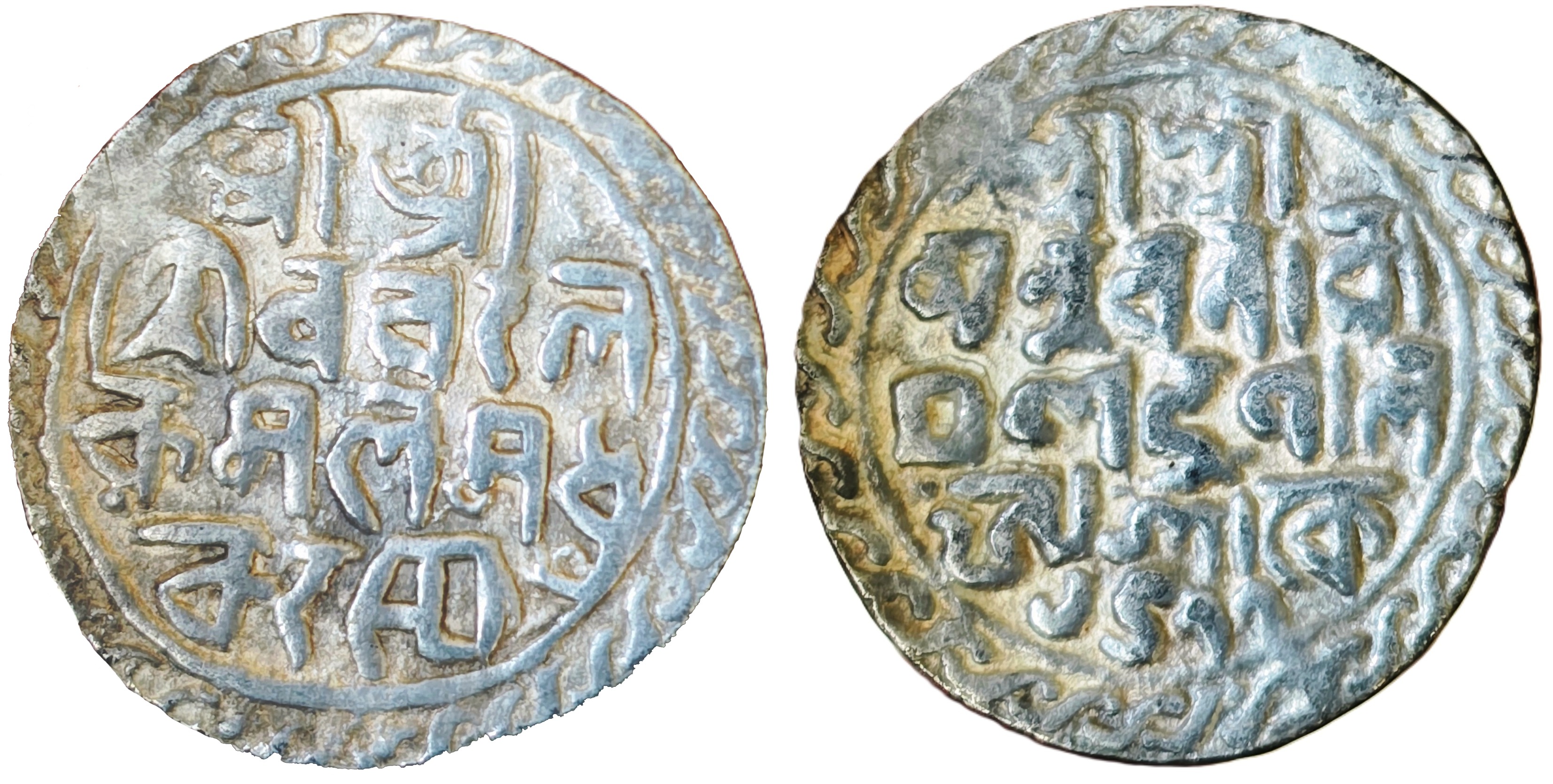
Alongside the dotted-border issues, a very small number of coins have been found with an arabesque or ornamental outer border. This type too was inspired by another variant of Nusrat Shah’s coinage. It is believed that such pieces were struck as a special commemorative issue, possibly marking an important occasion. Due to this limited purpose, these ornamental-border coins are extremely rare compared to the regular dotted-border type.